

Step #1: Break Down Your Writing Process Into TINY Steps
It’s easy to fall into the trap of thinking of “writing content” as a single step.
Creating content is actually made up of several smaller steps.
If you try to do all of these steps yourself (at a high standard), you won’t be able to achieve the publishing volume needed to scale.
Backlinko’s founder, Brian Dean, started as a solopreneur, writing and publishing articles by himself.
Fortunately, because he focused 100% on quality over quantity, the Backlinko blog grew like crazy. Even though he published an article every four to six weeks.
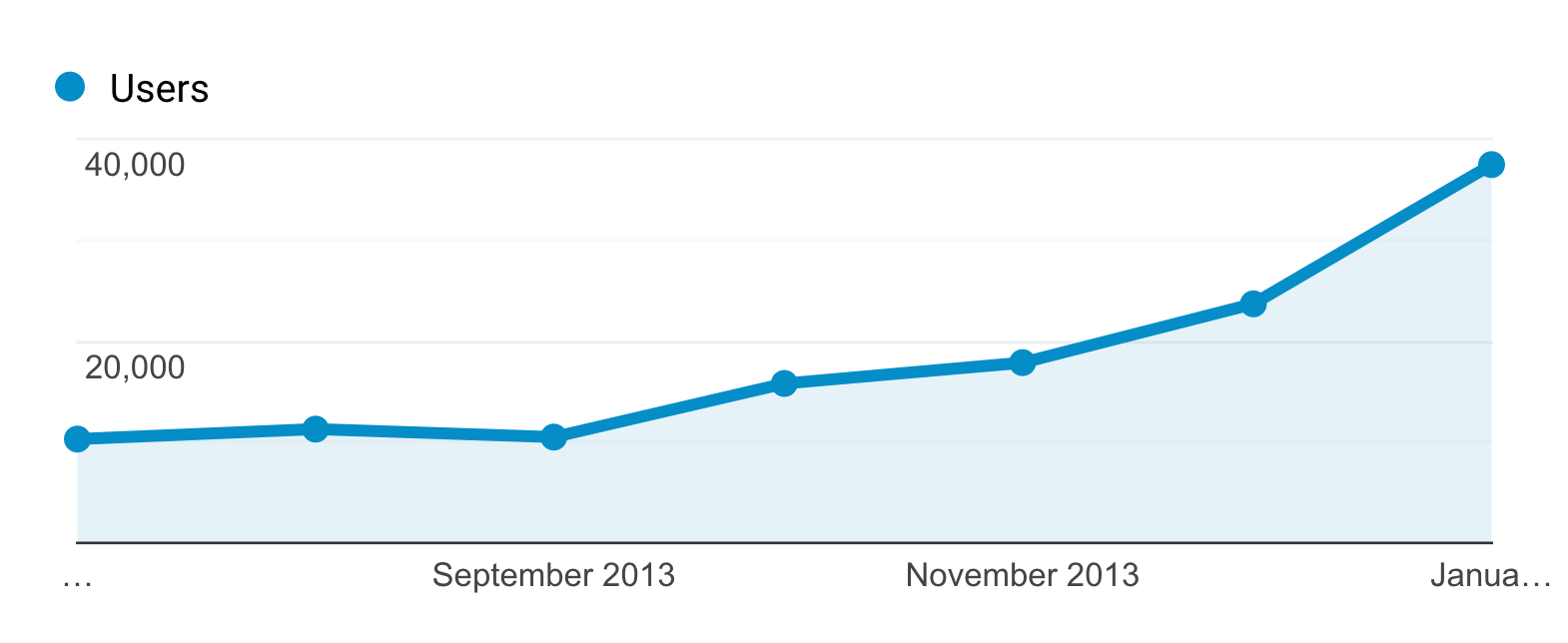
But at a certain point, traffic to the blog started to stall.
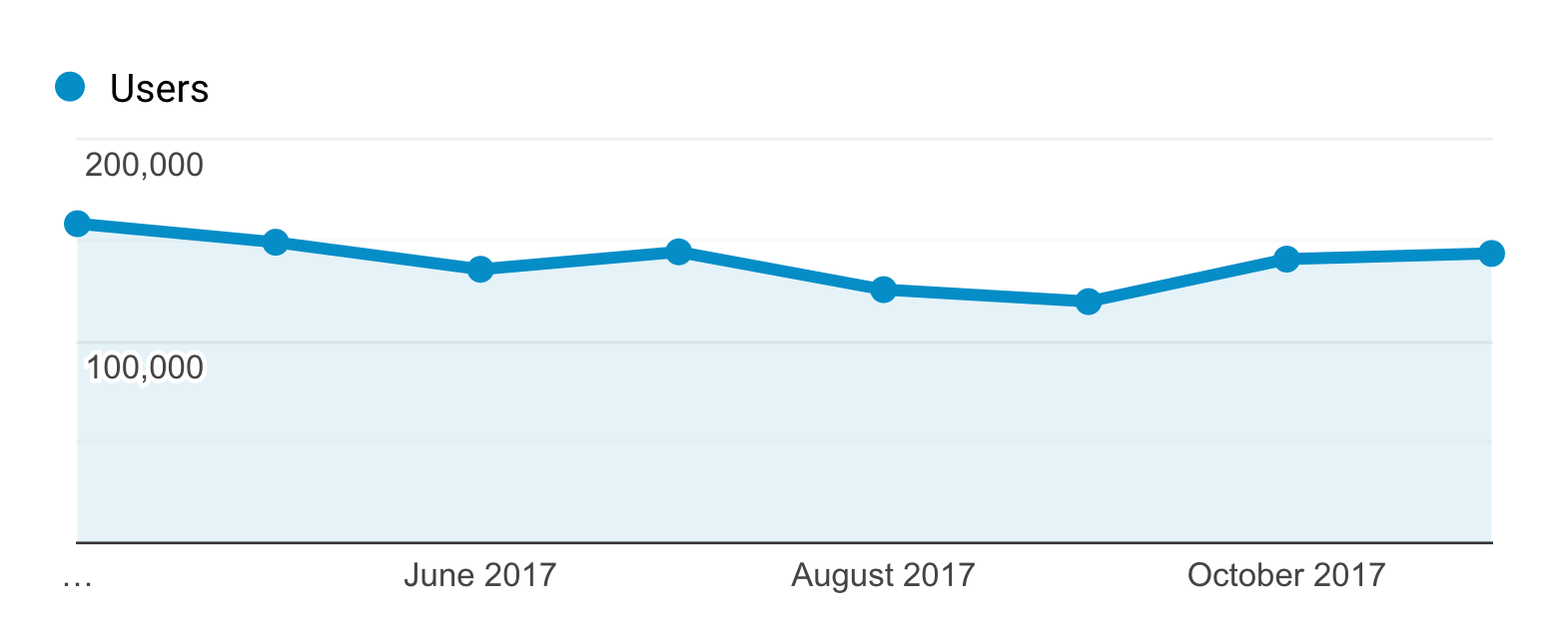
He realized that growing a blog past a certain point with only 10-12 posts per year was pretty much impossible.
And also that you don’t need to execute every single step yourself.
In other words:
You can focus on the stuff you’re good at (In Brian’s case, keyword research and writing). And get help with the things you’re not good at (editing, design, visuals).
This helped our content creation process go from this:

To what it is today:

We now publish 50 articles a month across Backlinko and TrafficThinkTank.com.
Without sacrificing quality.
That said:
Your content creation process will probably look different than ours.
There may be more steps. Or fewer steps.
The idea here isn’t to follow the same process that we use.
Instead, your goal should be to document all the steps you follow for creating content.
Then, get experts to help with some of those steps.
Step #2: Create an Organized Content Calendar
For your content calendar to do its job, it needs to be super organized.
(This is especially true if you’re putting out lots of 10x content, like ultimate guides, industry studies, or content hubs.)
As mentioned in step #1, “creating content” is a process with dozens of smaller steps.

And if you want to scale up, you need a way to list each step that needs to be done. And the current status of those steps.
Otherwise, and trust us on this one, something WILL fall through the cracks.
Today, our content schedule acts more like a project management system than an actual calendar. We use a combination of Google Sheets, Notion, and Monday.com.

So, if you already have a content calendar, great.
If not, make it a top priority.
And even if you have a calendar, take a second look at it to see if there’s any way that you can improve it.
Specifically, try to have every single tiny step laid out as a checklist. That way, nothing falls through the cracks.
For example, in 2024, we migrated our content calendar from Notion to Monday.com so we could get even more granular about each step.

For one article, we have 12 stages, including substages, for three revision rounds.
Each stage is grouped into one of five queues, including:
- Writer’s queue
- Editors queue
- Designers queue
- Developers queue
- Distribution queue
This gives us end-to-end visibility on our production so we can improve efficiencies.